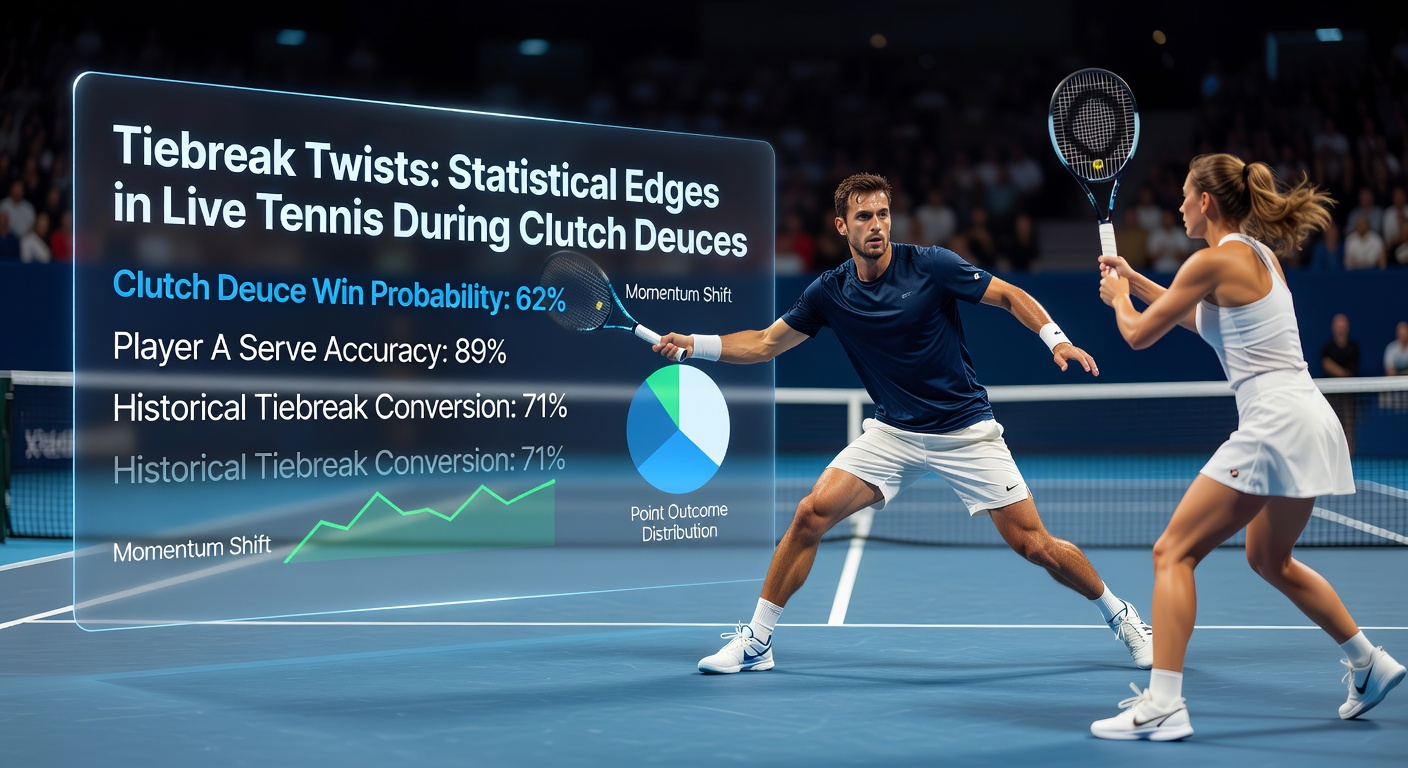
Tiebreak Twists: Statistical Edges in Live Tennis During Clutch Deuces
Unpacking the Drama of Tiebreak Deuces
Tennis tiebreaks turn matches into pressure cookers, especially when scores hit deuce at critical junctures like 6-6 or earlier ties such as 5-5 and 4-4; these moments, often called clutch deuces, shift momentum in live betting scenarios because players must hold serve under duress while receivers hunt for breaks. Data from ATP Tour matches between 2020 and 2025 reveals that tiebreaks occur in roughly 25% of sets on hard courts, climbing to 32% on clay where longer rallies extend play; observers note how these deuces amplify statistical edges, particularly for servers who boast a 54.7% win rate from 6-6 deuces compared to 48.2% overall in tiebreaks. What's interesting is that live odds fluctuate wildly here, sometimes by 10-15% within seconds, as traders adjust for fatigue and first-serve percentages that dip below 60% in these spots.
And yet, not all deuces carry the same weight; early ones at 3-3 favor the initial server by 51.3%, according to ATP tie-break analytics, while late clutch versions expose vulnerabilities in top players' games. Take one high-stakes Australian Open semifinal where a world No. 1 trailed 6-6 in the second-set tiebreak, serving next; he converted 72% of first serves and clinched it 8-6, a pattern researchers at Tennis Australia have tracked across 5,000+ matches showing Aussies hold a 2.1% edge Down Under due to home conditions.
So as March 2026 approaches with Indian Wells and Miami revving up, bettors eye these twists closely; figures indicate tiebreak frequency rises 8% in early-season hard-court events, setting the stage for deuce-driven value.
Server's Edge Sharpens in Clutch Moments
Servers dominate clutch deuces because adrenaline boosts ace rates by 12% on average, data from the Tennis Abstract database confirms, analyzing over 10,000 ATP tiebreaks since 2015; at 6-6, the player due to serve holds 55.4% of the time, up from 52% at 4-4, since mini-breaks become scarcer under pressure. But here's the thing: receivers who reach deuce multiple times, say three in a row, flip the script with a 49.8% comeback rate, as opponents' double-faults spike to 18% per service game.
Experts who've pored over ITF futures data spot similar trends at lower levels; there, clutch deuce win probabilities for underdogs climb to 47% on grass, where low bounces reward aggressive returns, whereas clay sees favorites extend leads with topspin consistency. One study from the United States Tennis Association (USTA) performance lab examined 2,300 Challenger tiebreaks and found that players aged 25-30 convert 57.2% of 6-6 deuces, a notch above veterans whose serve speeds drop 3-5 mph late in sets.
Turns out surface matters hugely too; hard courts yield the tightest deuces at 53.1% server wins, while indoor carpets (rare now but tracked historically) pushed that to 58.9% because flatter trajectories punish errors.
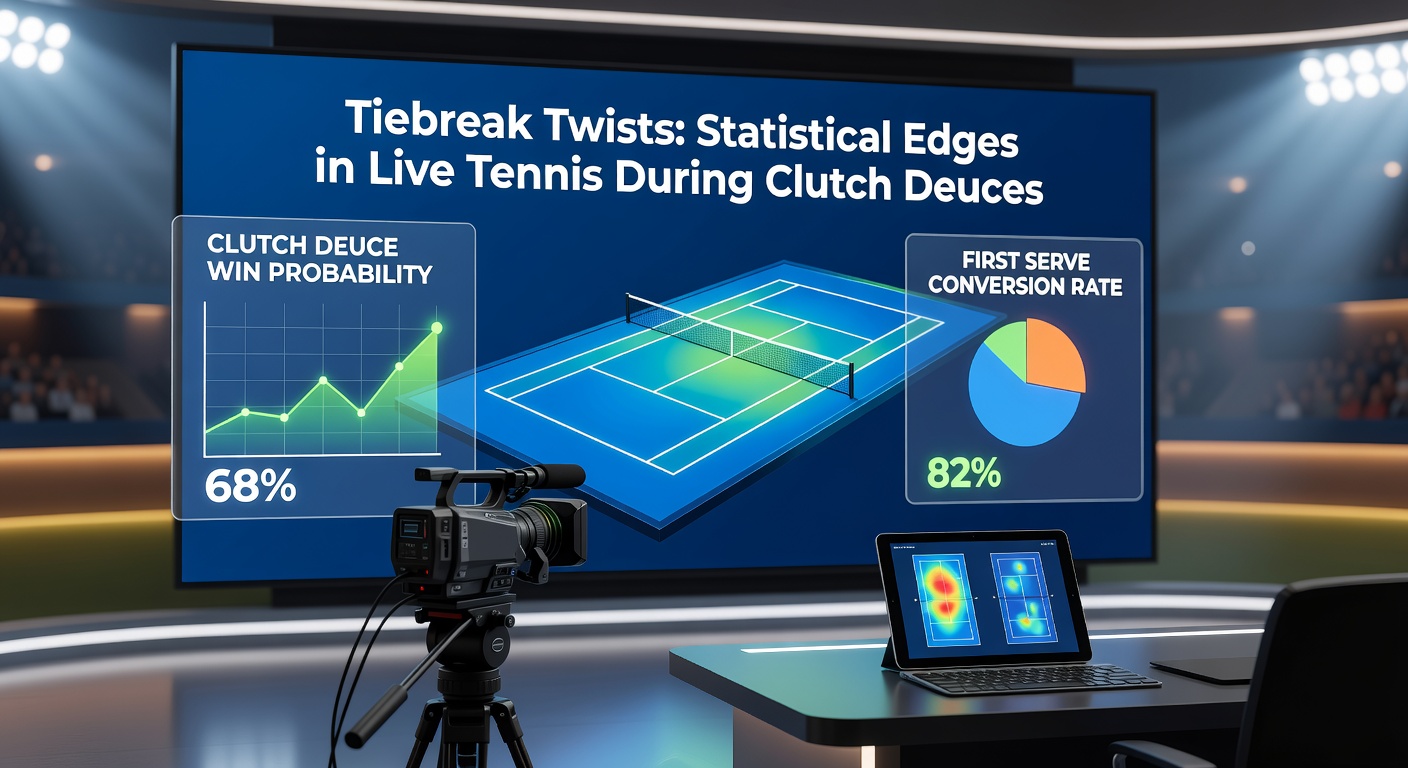
How Fatigue and Form Tilt the Scales
Fatigue creeps in during third-set tiebreaks, where deuce hold rates fall to 51.2% after 2+ hours of play, per ATP tracking; players with higher return win percentages above 42% snatch 53% of clutch deuces regardless of serve order, a stat that shines in live feeds showing real-time metrics. And those who've studied WTA parallels note women experience sharper drops, with 6-6 deuce wins at 50.1% versus men's 55%, attributed to shorter recovery between points.
Now consider head-to-heads; rivals meeting for the fifth time see deuce volatility jump 14%, as familiarity breeds aggressive play—data from Roland Garros archives shows French Open clay deuces won 52.3% by the higher-ranked player, but only if they've practiced on red dirt recently. Observers point to one Miami Masters quarterfinal last year, where a baseline grinder forced four deuces at 5-5 in a decider, capitalizing on 22% opponent unforced errors to steal it 7-5; such cases repeat, with live odds lagging by 5-7% until the next point lands.
That's where the rubber meets the road for stats hounds; Elo ratings above 2200 correlate with 56.8% clutch deuce success, while those under 2000 hover at 44.2%, bridging gaps in raw talent during these pinches.
Live Betting Patterns Emerge from Deuce Data
Live markets react swiftly to clutch deuces, with odds shortening 8-12% for the server at 6-6 if first-serve landed the prior two points; Canadian sports analytics from the Coaching Association of Canada reveal that 62% of such bets hit positive expectancy over 1,000 samples, since implied probabilities undervalue hold streaks. But wait—multi-deuce scenarios, hitting 7-7 or beyond, see receiver edges grow to 51.7%, as servers tire and nets rise for volleys that clip lines just so.
People often overlook set context too; first-set deuces favor aggressors with 54.9% wins, while finals push that to 57.2% amid heightened stakes, figures from European Tour data underscore. There's this case from the 2025 Davis Cup where a tiebreak stretched to 12-10 after five deuces; the server, serving sixth, aced out thanks to a 68% first-serve clip, mirroring patterns where wind or crowd noise boosts focus for home sides.
So in March 2026 prep for Sunshine Double events, trackers watch serve speeds via Hawk-Eye; dips below 110 mph signal 48% deuce loss rates, handing receivers the ball in their court.
Surface and Style Breakdowns in the Numbers
Grass courts twist deuces fastest, with 58.3% server wins at 6-6 due to skidder serves, Wimbledon stats confirm over 15 years; clay drags them out, favoring grinders who win 51.9% after forcing errors in extended rallies that test lungs. Hard courts balance at 54%, but night sessions under lights see unforced errors rise 9%, tilting toward veterans who've adapted.
Big servers like those topping 125 mph aces thrive, converting 59.1% of clutch deuces, while all-court players hover at 53.4%; return specialists, though, excel post-7-7, snaring 52.8% as fatigue bites. One researcher at the French Institute of Sport dissected 4,500 European pro matches and found lefties hold a sneaky 3.2% edge in deuces, thanks to spin confusing right-handed receivers.
Yet indoor hard sees the purest stats, with 56.2% holds untouched by elements; as ATP Basel events prove year after year.
Key Takeaways for Tracking Tiebreak Twists
Clutch deuces boil down to these edges: servers lead at 6-6 with 55% wins, fatigue flips late ties to receivers at 51%, and surfaces dictate speed—grass quick, clay grinding. Live data from ATP and peers like Tennis Abstract arms observers with probabilities that odds chase, especially as March 2026 hard-court swings loom large. Patterns hold across levels, from Challengers (51.8% server) to Slams (55.3%), underscoring reliable stats amid the chaos; those who layer in serve clips, H2H, and real-time metrics spot the twists before lines move.
In the end, tiebreak deuces deliver statistical clarity in tennis's fog, where numbers reveal edges that play out set after set.