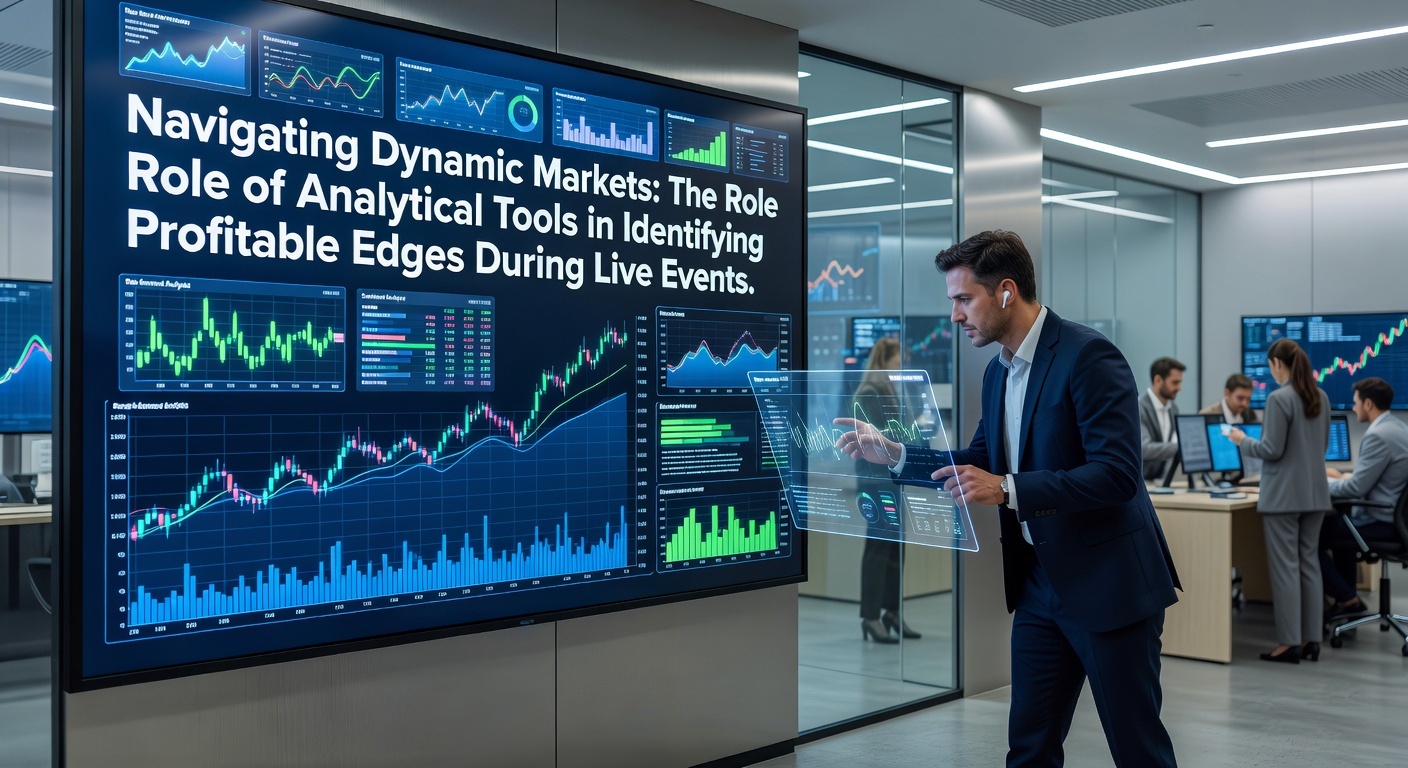
Navigating Dynamic Markets: The Role of Analytical Tools in Identifying Profitable Edges During Live Events
Dynamic markets shift in real time when live events unfold, whether those involve major sports competitions, corporate earnings releases, or geopolitical developments, and analytical tools have become essential for participants seeking to spot profitable edges amid the volatility. Observers note that these tools process vast streams of incoming data, apply statistical models, and flag opportunities before prices fully adjust, while participants who rely on manual observation alone often find themselves reacting too late. Research from institutions such as the National Bureau of Economic Research indicates that markets incorporating live feeds from events exhibit measurable inefficiencies lasting from seconds to several minutes, creating windows where properly calibrated software can highlight value. Those who study these environments point out that the core advantage stems from speed and pattern recognition rather than intuition. Real-time data aggregators pull odds or prices from multiple venues, cross-reference them with historical baselines, and run simulations that account for variables like player fatigue, weather shifts, or sudden news spikes. During the buildup to the 2026 international tournaments scheduled for May, for instance, such systems tracked minute-by-minute adjustments in team performance metrics and translated them into probability updates that manual bettors could not match. The result, according to industry data aggregators, is a measurable increase in the frequency of positive expected-value decisions when tools operate continuously throughout the event.How Real-Time Processing Creates Edges
Analytical platforms function by ingesting live inputs at high frequency and applying layered algorithms that compare current conditions against thousands of past scenarios. One common approach involves expected-value modeling, where the tool calculates the difference between implied probabilities and statistically derived outcomes, then surfaces discrepancies that exceed a user-defined threshold. Another layer incorporates momentum indicators that detect acceleration or deceleration in price movement, allowing traders to anticipate reversals before the broader market reacts.
Take the case of a live financial event where a company releases quarterly results: the initial price swing often overshoots or undershoots the eventual equilibrium. Systems developed by quantitative research groups at universities including MIT have demonstrated through back-testing that automated detection of these overshoots can generate repeatable edges when combined with volume filters and order-book depth analysis. Participants who integrate these signals report tighter entry timing and reduced exposure to adverse slippage, because the software already factors in liquidity constraints that appear only during peak event hours.
Integration with Broader Data Sources
Modern analytical suites do not operate in isolation; they draw from satellite feeds, social sentiment trackers, and official regulatory filings released in real time. A report compiled by the Bank for International Settlements highlights how cross-market correlations strengthen during live global events, meaning a movement in one asset class can reliably forecast shifts in another when the right variables are monitored simultaneously. Tools that maintain live connections to multiple exchanges therefore surface arbitrage-style opportunities or hedged positions that single-market observers miss entirely.
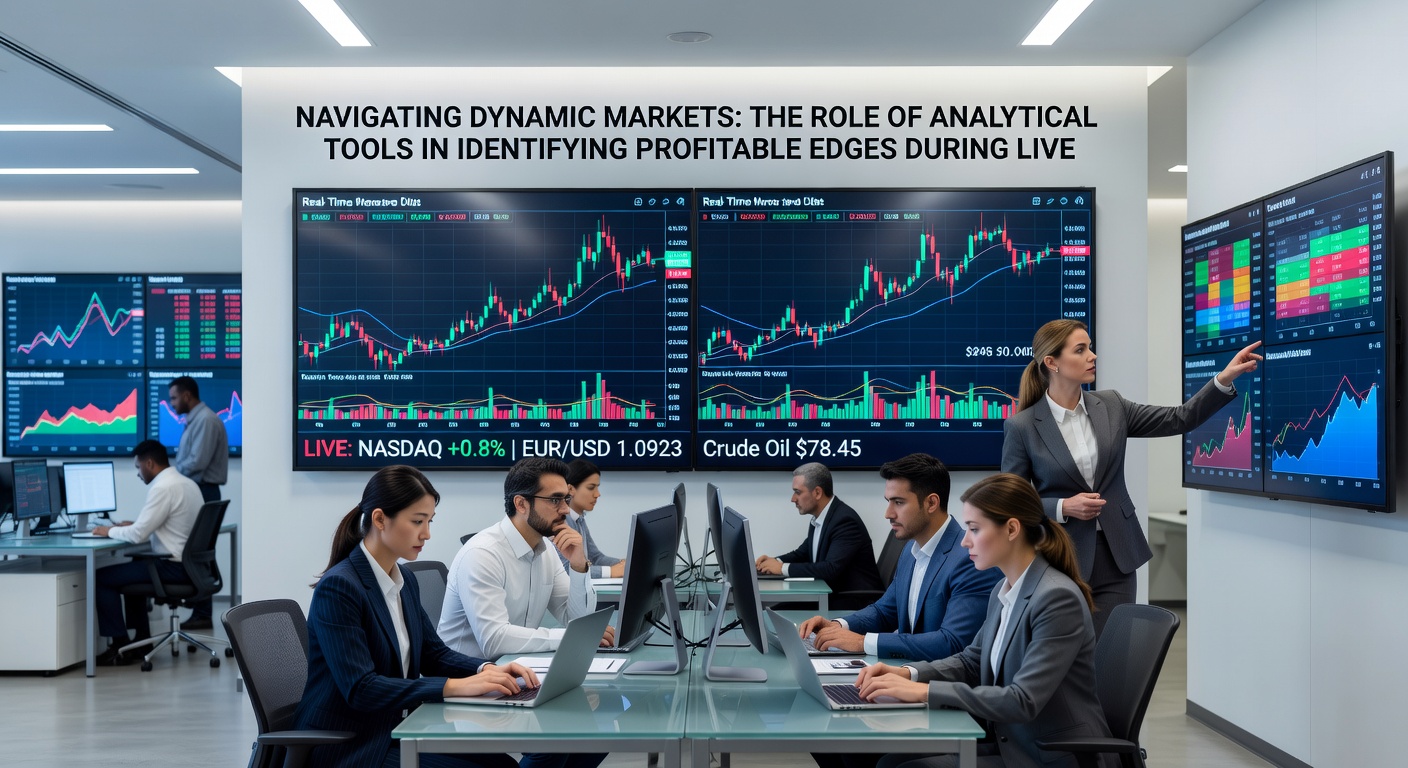
Those who have examined platform performance during high-stakes periods note that customization plays a decisive role. Users can adjust sensitivity parameters to match their risk tolerance, set alerts for specific statistical thresholds, and back-test strategies against archived event data before deploying capital in the current session. This flexibility turns generic software into a tailored decision-support system that adapts as the live event evolves, rather than forcing a one-size-fits-all approach.
Practical Application Across Event Types
During prolonged live competitions such as multi-stage endurance events, tools track cumulative performance indicators that influence late-stage pricing. Statistical packages flag when a participant’s metrics deviate from historical norms at a statistically significant level, prompting position adjustments while liquidity remains available. In shorter, high-intensity formats the same platforms emphasize rapid recalibration, updating probabilities after every discrete action and highlighting edges that decay within seconds.
Financial markets present parallel challenges when macroeconomic announcements arrive during trading hours. Analytical engines parse the text of press releases using natural-language processing, quantify surprise factors relative to consensus forecasts, and map those surprises onto asset-class responses observed in prior cycles. According to findings published by the European Central Bank, markets that incorporate such processed signals exhibit faster convergence to new equilibrium levels, which in turn reduces the duration of exploitable mispricings yet increases their predictability for those equipped with the right models.
Limitations and Ongoing Refinement
Even sophisticated tools encounter constraints when data feeds experience latency or when unprecedented event outcomes fall outside historical training sets. Developers therefore maintain continuous feedback loops that incorporate new observations and retrain models after each major live occurrence. Market participants who treat these systems as static solutions rather than evolving platforms frequently observe diminishing returns, whereas those who allocate resources to regular calibration maintain consistent performance across successive events.
Conclusion
Analytical tools have shifted the landscape of dynamic markets by converting raw live-event data into actionable probability assessments that human observers cannot replicate at scale. As events in May 2026 and beyond unfold under increasing scrutiny, the participants who combine robust data infrastructure with disciplined parameter management continue to locate edges that remain invisible to slower methods. The trajectory points toward further integration of machine-learning components and expanded data partnerships, yet the fundamental requirement stays constant: tools must process information faster and more comprehensively than the market itself.