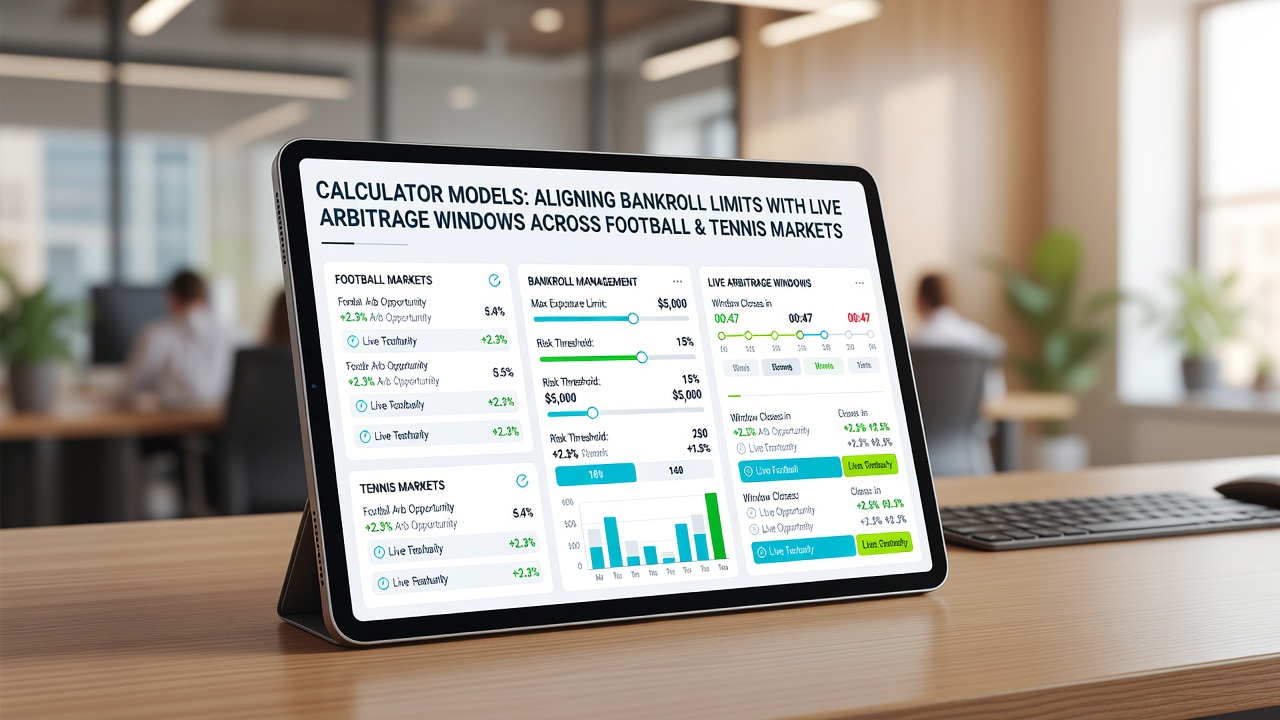
Integrated Calculator Systems for Bankroll Management During Live Arbitrage Windows in Football and Tennis
Calculator models designed to synchronize bankroll limits with live arbitrage windows operate by processing real-time odds data from multiple bookmakers while enforcing predefined exposure thresholds across football and tennis markets. These tools combine expected value computations with dynamic risk parameters to identify brief pricing discrepancies that arise during matches and sets. Data from industry reports indicates that such systems track variables including current stake allocation, remaining bankroll percentage, and time-sensitive window durations that typically last between thirty seconds and three minutes in fast-moving events.
Core Components of Alignment Calculators
Alignment calculators integrate several modules that update simultaneously when new odds streams arrive. One module calculates implied probabilities from decimal or American odds formats while another applies bankroll caps expressed as fixed percentages or absolute figures. Researchers at the University of Nevada Las Vegas have examined similar frameworks in controlled simulations, noting that the combined output produces recommended stake sizes only when the projected arbitrage margin exceeds both transaction costs and the preset bankroll ceiling.
Football markets present continuous scoreline and total goals arbitrage opportunities during halves, whereas tennis markets generate set and game level discrepancies that shift rapidly after each point. The calculators adjust for these differences by weighting volatility indicators derived from historical match data, allowing users to maintain exposure limits even when windows open and close within the same rally sequence.
Application Across Football and Tennis Markets
During live football matches, calculators monitor corner counts, card probabilities, and player substitution impacts that influence in-play pricing across exchanges and traditional operators. When an arbitrage window emerges on over-under totals, the model cross-checks the proposed stake against the current bankroll allocation and rejects entries that would breach the daily or session limit. Tennis introduces additional layers because service breaks and tiebreak sequences create clustered volatility spikes. Systems therefore incorporate set-specific variance factors so that bankroll drawdowns remain within defined ranges across multiple simultaneous matches.
Observers note that these models often employ modified versions of the Kelly criterion adapted for arbitrage rather than single-outcome value bets. The formula incorporates the arbitrage margin percentage and scales the recommended stake proportionally while respecting the maximum allowable loss threshold entered by the operator. When margins compress below a configurable floor, the calculator withholds recommendations entirely until fresh data refreshes the opportunity matrix.
Live Window Detection and Timing Mechanisms
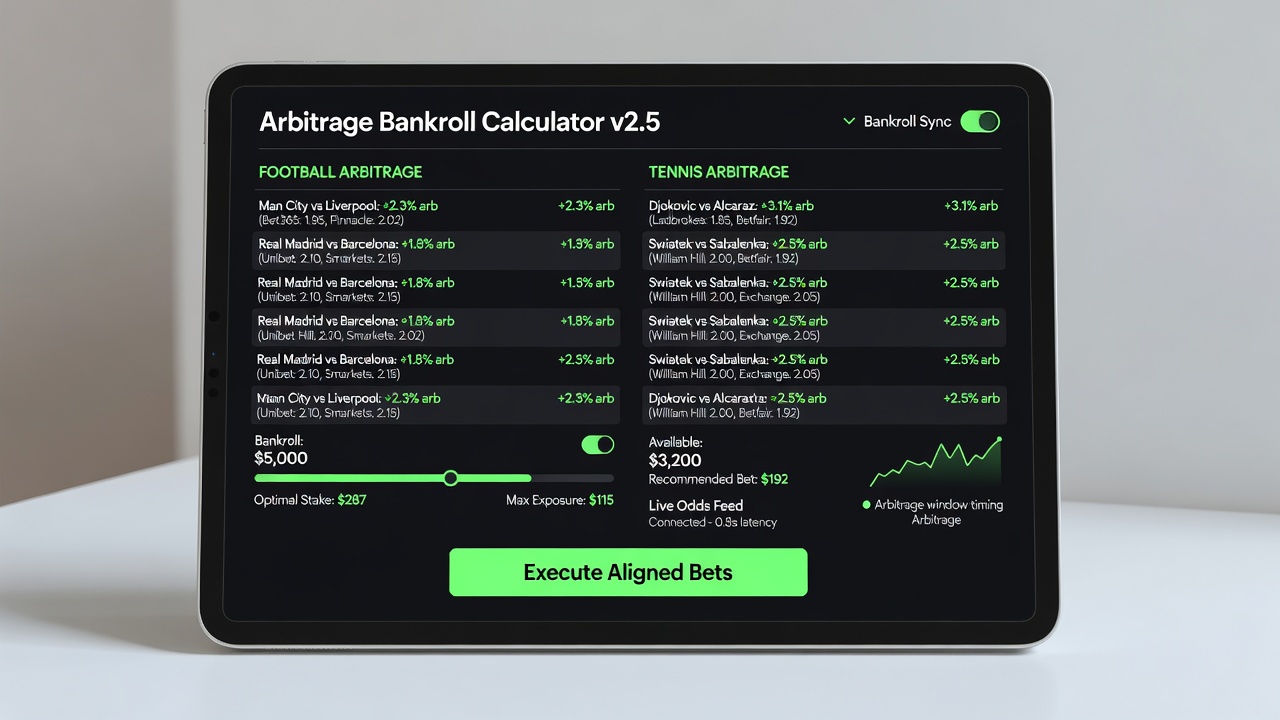
Timing mechanisms within the calculators rely on latency monitoring between data feeds and bookmaker APIs. When a discrepancy appears, the system timestamps the window and estimates its probable duration based on similar historical patterns recorded in football leagues and ATP or WTA events. Users receive alerts only for opportunities that satisfy both the margin threshold and the remaining bankroll capacity at that instant.
Figures from the American Gaming Association reveal steady growth in live betting volumes through 2025, with football and tennis contributing substantial shares of in-play handle. Alignment calculators therefore become essential for operators who must enforce internal risk controls while capturing these transient edges. The models also log each executed or rejected opportunity, producing audit trails that support compliance reporting in regulated jurisdictions.
Integration With External Data Sources
Many calculator platforms ingest supplementary feeds such as player fatigue metrics, weather conditions for outdoor tennis events, and pitch reports for football fixtures. These inputs refine probability estimates that feed into the arbitrage detection layer, ensuring that bankroll limits align not only with raw odds but also with contextual factors that influence outcome distributions. When multiple windows open across concurrent matches, the system prioritizes allocations according to a weighted scoring function that balances margin size against remaining session capacity.
Reports issued by the European Gaming and Betting Association highlight how cross-market synchronization tools help maintain disciplined exposure levels even during high-volume tournament periods. Calculators achieve this by continuously recalculating available headroom after each confirmed stake and by pausing new entries once aggregate limits approach predefined ceilings.
Conclusion
Calculator models that align bankroll limits with live arbitrage windows continue to evolve as data latency decreases and market coverage expands across football and tennis competitions. These systems process multiple variables in parallel to deliver stake recommendations that respect both profitability thresholds and risk parameters. As live betting volumes increase through 2026, the precision of such integrated frameworks supports consistent application of exposure rules across diverse event types and time zones.