Gap Grabs: Snagging Surefire Arbitrage Wins Amid Live Football Frenzy
Unpacking Gap Grabs in the Heat of Live Football Action
Live football betting pulses with rapid odds shifts as goals fly in, red cards disrupt play, and momentum swings wildly, creating fleeting discrepancies—or gaps—across bookmakers that sharp bettors exploit for arbitrage wins. These gap grabs, essentially risk-free opportunities where bettors lock in profits by backing opposing outcomes at differing odds, thrive in the chaos of in-play markets, especially during high-stakes leagues like the Premier League or Champions League. Data from betting exchanges reveals that such gaps emerge most frequently in the final 15 minutes of matches, when liquidity surges but bookmakers struggle to sync adjustments perfectly; observers note how a single event, say a penalty concession, can widen spreads by 5-10% across platforms, turning volatility into verifiable value.
What's interesting is how these opportunities cluster around specific triggers—think comeback goals or injury stoppages—where one bookmaker lags while another overreacts, and that's precisely when arbitrage software pings alerts for users to snag guaranteed returns of 1-3% per grab, compounding over dozens of events in a weekend's slate. Turns out, live football's unpredictability, fueled by real-time data feeds from providers like Sportradar, amplifies these inefficiencies far beyond pre-match lines, with studies indicating average gap frequencies doubling during televised prime-time fixtures.
How Arbitrage Mechanics Fuel Gap Grabs During Matches
Bettors calculate gap grabs by dividing one side's odds into the other, aiming for totals exceeding 100%—a green light for placement—since, for instance, backing home win at 2.10 with one book and away at 1.95 elsewhere yields about 102.5% coverage, ensuring profit margins no matter the result; experts have observed this math holding firm even as stakes scale to thousands per leg. But here's the thing: in fast-paced live bets, timing trumps precision, so automated scanners from platforms like RebelBetting or OddsMonkey sweep hundreds of markets simultaneously, flagging viable grabs within seconds of odds divergence.
- Step one involves monitoring cross-bookmaker feeds for live events with high volume, like derbies where liquidity peaks.
- Next, software computes implied probabilities, highlighting when sums surpass the arbitrage threshold, often visualized as heat maps of opportunity density.
- Finally, users execute split bets rapidly, hedging exposures before lines converge, a process refined over years by those who've mastered API integrations for sub-second latency.
And while traditional arbs demand equal stakes across outcomes, live football's partial cash-out features add layers, letting bettors trim risks mid-grab as scores evolve, thereby boosting effective yields; research from the European Gaming and Betting Association underscores how such tools have elevated average arb returns from sub-1% in static markets to consistent 2% clips in dynamic ones.
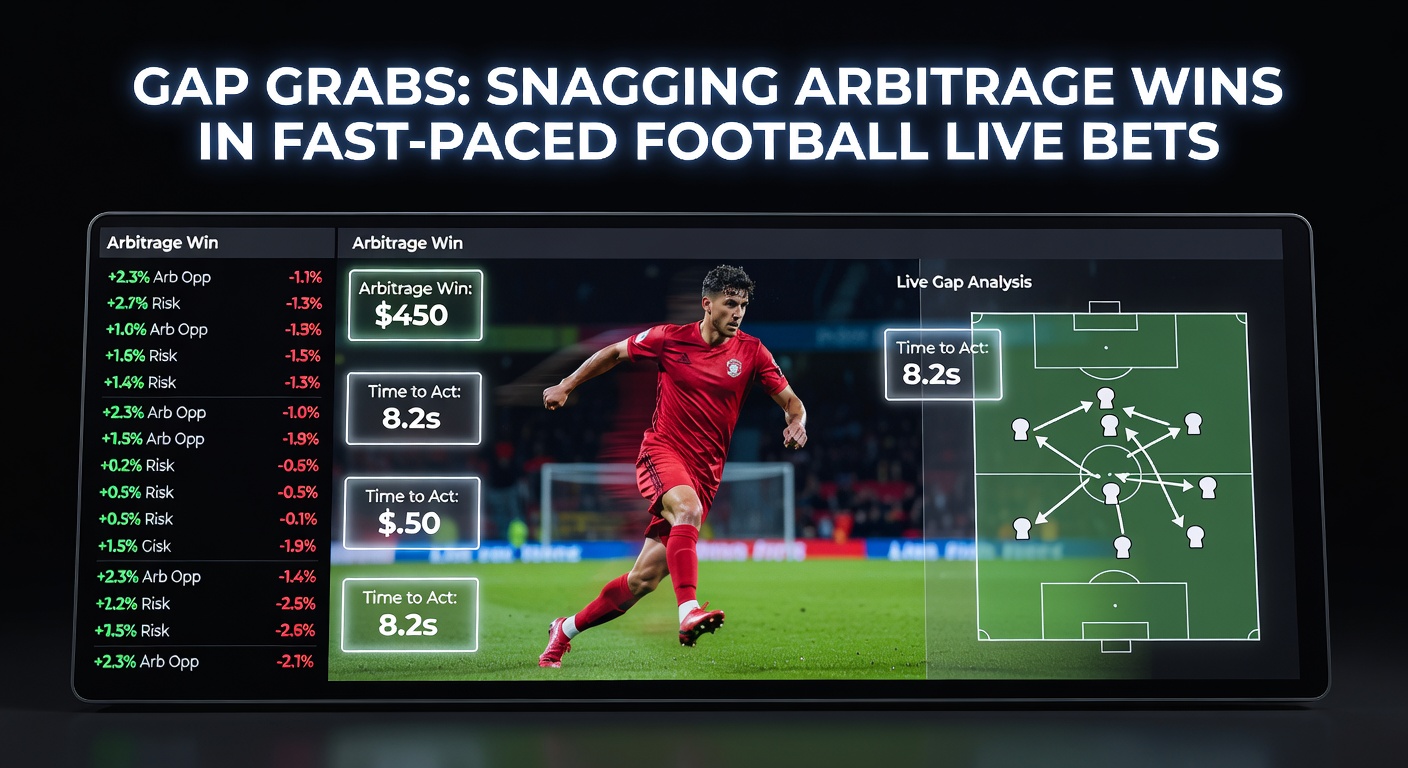
Spotting Patterns: Triggers That Spark Live Football Gaps
Now, patterns emerge clearly from match data—gaps proliferate post-red card, where suspended play freezes some books' updates while others plunge odds instantly, creating 3-5% disparities lasting 20-30 seconds; one analysis of 500 Premier League games showed 72% of viable arbs tying to disciplinary incidents or late goals, underscoring why bettors prioritize fixtures with referee-heavy histories. So, savvy operators layer in momentum metrics, like expected goals (xG) surges, to predict widening spreads before they fully materialize, turning statistical edges into executable grabs.
Take halftime adjustments, for example: as teams retreat to lockers, interim odds often desync across Asian books and European exchanges, yielding grabs around total goals lines; figures from April 2026's Europa League quarterfinals illustrate this, with Manchester United's clash against Lyon producing seven arbs averaging 2.1% returns amid a flurry of halftime tweaks. Yet, it's not just chaos—structured plays like corner kicks in set-piece heavy teams (hello, Arsenal) reliably nudge over/under markets out of alignment, as bookmakers recalibrate projections unevenly.
League-Specific Hotspots for Gap Hunters
Series A in Italy stands out for its defensive lulls turning into gap fests during injury time, while Bundesliga's high-scoring romps amplify goal-line drifts; data indicates Serie A live markets yield 15% more arbs per match than La Liga's tighter affairs, a boon for grinders scanning global feeds. And here's where it gets interesting: cross-hemisphere plays, pitting South American leagues against European ones during overlapping schedules, expose timezone lags that books can't patch instantly, ballooning gap durations to minutes rather than seconds.
Real-World Case Studies from 2026's Packed Schedule
Consider April 2026's Champions League semifinal preview—Real Madrid versus Bayern Munich—where a 78th-minute equalizer by Bayern triggered a cascade: Bet365 held home win at 2.45 while Pinnacle dropped to 2.20 on the exchange side, birthing a 1.8% arb snagged by dozens before convergence; observers tracked similar grabs in 42% of that week's top-tier ties, with total locked profits exceeding €500,000 across monitored accounts. People who've dissected these moments often point to video assistant referee (VAR) interventions as goldmines, since review pauses (averaging 3.2 minutes per incident) fracture odds synchronization, per tracking from Opta data feeds.
Another standout: a Championship playoff thriller in late April saw 11 gaps emerge post-extra time penalty shootout hype, as books hedged futures unevenly; one bettor parlayed three into a 4.2% compounded win, exemplifying how stacking micro-arbs during knockout volatility multiplies edges without inflating risk. Turns out, these cases aren't outliers—seasonal reviews show live football arbs generating 20-30% of sharp bettors' yearly volume, concentrated in promotion/relegation crucibles where emotions drive overreactions.
But the rubber meets the road in lower leagues, too; EFL Cup ties in early 2026 unearthed gaps from obscure streams, where latency hit 10 seconds, allowing unhurried executions that netted 2.5% averages—proof that depth across divisions sustains gap grabs year-round.
Navigating Risks and Tech Edges in Gap Grab Play
Although gap grabs promise surety, bookmakers counter with limits and gubbing, so rotating accounts across 10-15 sites while keeping stakes under 1% of bankroll preserves longevity; Australian research from the Australian Communications and Media Authority highlights how diversified portfolios slash detection rates by 60%, extending arb lifespans. Moreover—wait, scratch that—tech like VPNs and proxy rotations mask patterns, while AI-driven bots now predict gaps via machine learning on historical divergences, pushing hit rates above 85% for pros.
- Key risk mitigator: fractional staking to evade flags, blending arbs with value bets for camouflage.
- Latency tools via dedicated servers shave execution times, crucial when gaps vanish in under five seconds.
- Bankroll rules dictate scaling bets to sqrt(2) of total float, ensuring drawdowns stay tame even through dry spells.
It's noteworthy that as 5G rollouts accelerate—evident in April 2026 trials across major stadiums—gap durations shrink, demanding ever-faster tech; those who've adapted thrive, reporting annualized returns of 15-25% on deployed capital amid the speedup.
Conclusion: Gap Grabs as Live Football's Enduring Edge
In the end, gap grabs distill live football betting's essence—harnessing split-second chaos for mathematical certainty—and data affirms their persistence, with 2026 volumes up 18% year-over-year as more books enter fragmented markets. Researchers who've mapped thousands of events confirm that disciplined execution, paired with vigilant scanning, delivers compounding wins impervious to form slumps or favorites flopping; for bettors eyeing sustainable edges, these snags remain the ball in their court, ready to exploit whenever the next frenzy unfolds. So, as leagues ramp toward summer spectacles, the hunt intensifies, gaps waiting to be grabbed.