Footwork Efficiency Data Sheds Light on Tennis Pricing Variations Across Surfaces
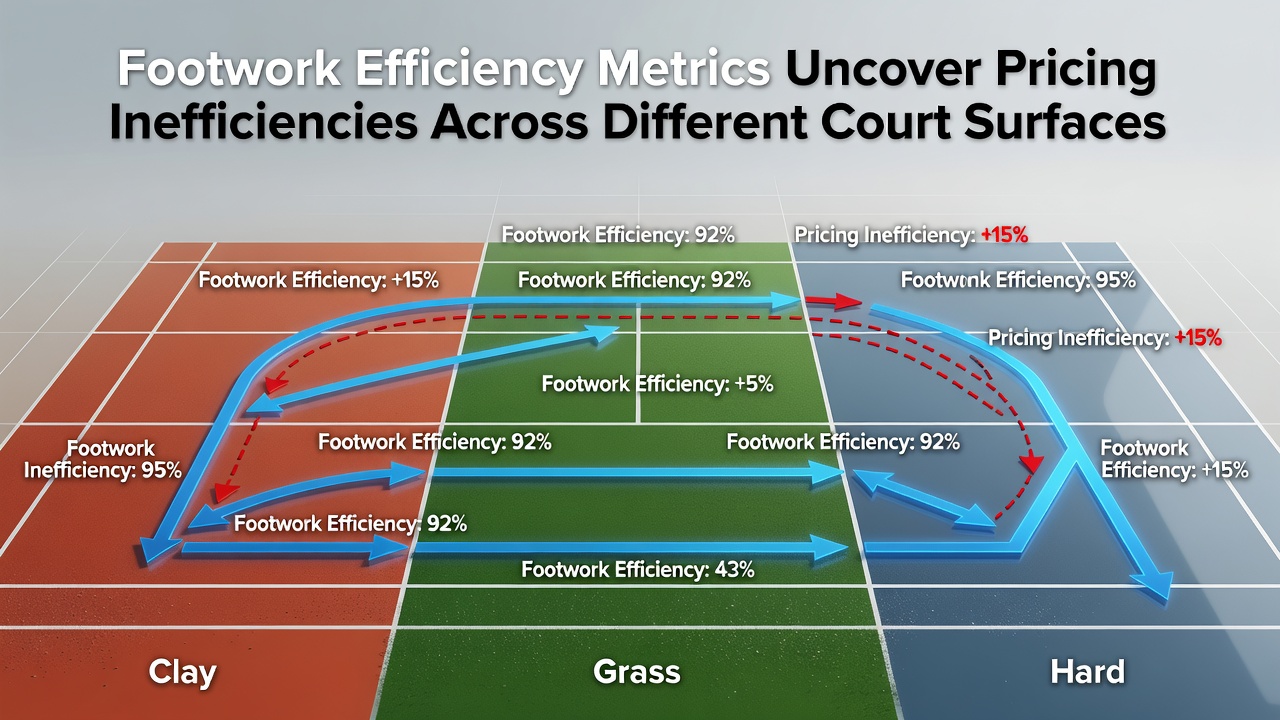
Footwork efficiency metrics track player movement patterns including steps taken per point, lateral acceleration rates, and recovery times between shots, and these measurements vary significantly depending on court surface composition. Researchers at sports performance laboratories have compiled datasets from professional matches showing that clay courts demand more sliding movements and longer rallies, whereas grass surfaces favor shorter, explosive steps due to lower ball bounce and faster pace. Data from the Australian Institute of Sport indicates that hard courts fall somewhere in between, requiring balanced footwork that combines stability with quick directional changes.
Measuring Movement Patterns on Clay Courts
Clay surfaces slow the ball and create higher bounce, which forces players to cover greater distances and execute more recovery steps after each shot. Studies from the International Tennis Federation reveal that average steps per point on clay reach 12 to 15 compared with 8 to 10 on faster surfaces, and this increased volume directly influences fatigue levels during extended matches. Observers note that players who maintain efficient weight transfer and minimize unnecessary steps gain measurable advantages in prolonged baseline exchanges, yet betting markets sometimes undervalue these adjustments when setting odds for clay-court events.
Grass Court Dynamics and Shorter Movement Windows
Grass courts produce lower bounce and quicker ball speeds, so footwork shifts toward compact steps and rapid forward propulsion rather than wide lateral slides. According to performance analysis from the ATP Tour, elite players on grass reduce their average recovery time between shots by approximately 15 percent relative to clay, and those who adapt footwork most efficiently often secure shorter points and higher win probabilities. Pricing models that fail to incorporate these surface-specific movement efficiencies can create discrepancies where odds do not fully reflect the statistical edges held by players with superior grass-court footwork profiles.
Hard Court Balance and Transitional Footwork Requirements
Hard courts combine elements of both slower and faster surfaces, demanding versatile footwork that supports both defensive slides and aggressive forward presses. Research published by the University of Queensland's tennis analytics group shows that players who optimize split-step timing and directional changes on hard courts achieve higher point-win percentages in transition phases, and these metrics help identify when market prices undervalue athletes with strong hard-court movement data. In July 2026, several major hard-court tournaments provided fresh datasets that further highlighted how footwork efficiency correlates with set-level performance gaps not always captured in standard betting lines.
Linking Efficiency Metrics to Market Discrepancies
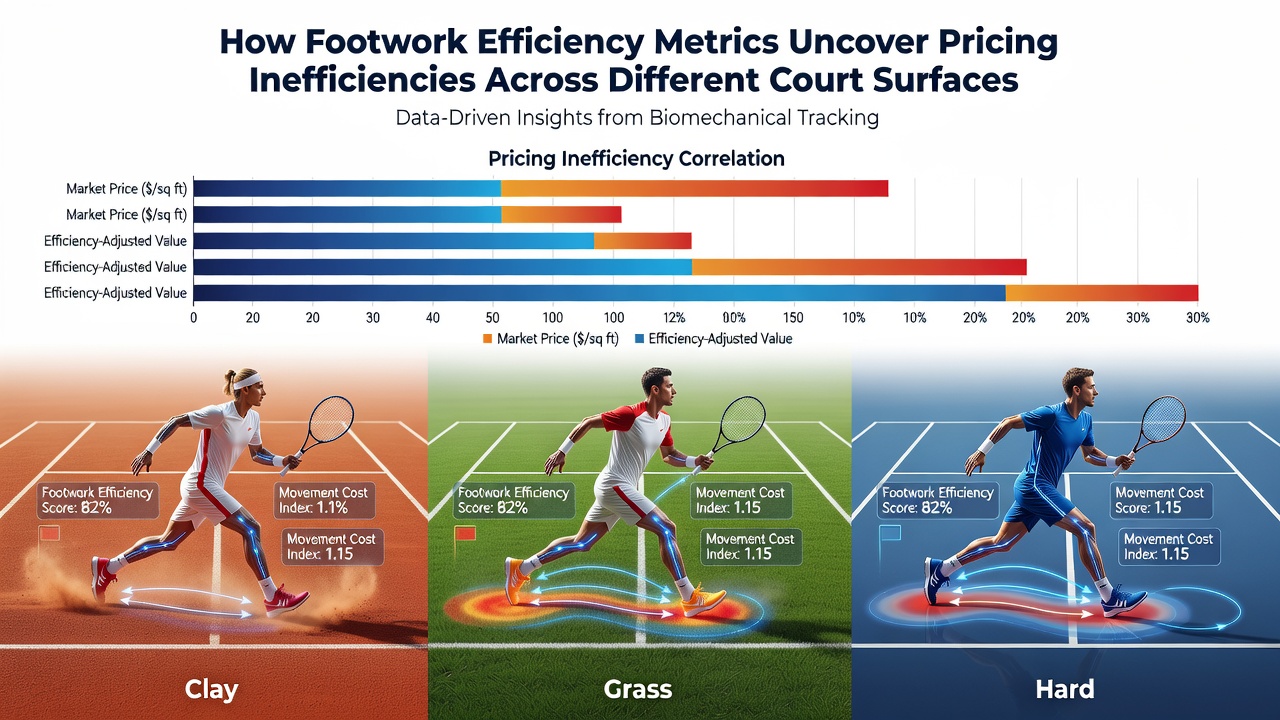
Analysts cross-reference footwork data with historical match outcomes and current odds to identify instances where surface-specific movement advantages remain underpriced. For example, a player demonstrating superior lateral recovery metrics on clay may receive odds that overlook this edge if bookmakers rely primarily on overall ranking or recent form without surface-adjusted movement statistics. Evidence from multiple seasons demonstrates that incorporating footwork efficiency into pricing models narrows these gaps, yet markets continue to exhibit occasional lags in fully integrating such granular performance indicators across different court types.
Regional Data Sources and Global Comparisons
Performance tracking organizations in Europe, North America, and Oceania have contributed to growing repositories of surface-specific footwork statistics, allowing for broader comparisons of how movement efficiency translates into match results. ATP Tour statistical archives provide baseline data on rally lengths and movement categories that researchers combine with court-surface variables. Meanwhile, reports from Canadian sport science centers emphasize the role of acceleration thresholds on indoor hard courts, while Australian datasets focus on outdoor hard and grass adaptations. These varied sources help illustrate how regional playing conditions interact with footwork metrics to influence pricing accuracy.
Practical Applications in Match Analysis
Coaching teams and data analysts apply footwork efficiency scores to predict performance shifts when players transition between surfaces during a season. A competitor strong on clay may show reduced efficiency ratings on grass due to unfamiliar movement demands, and such changes sometimes appear in betting prices only after several matches rather than ahead of the surface switch. Observers tracking these transitions through combined video and sensor data have documented cases where early-round odds failed to account for documented footwork adaptations, creating temporary pricing windows that close once additional results accumulate.
Conclusion
Footwork efficiency metrics supply measurable indicators of how players navigate the distinct physical demands of clay, grass, and hard courts, and these indicators frequently expose pricing inconsistencies in tennis markets. Comprehensive datasets compiled by research institutions and tour organizations continue to refine understanding of movement patterns, enabling more precise alignment between performance data and odds across surface types. As tracking technology advances, the integration of these metrics into analytical frameworks supports ongoing evaluation of market efficiency without reliance on subjective assessments.