
Chasing Live Odds Drift: Soccer Strategies for Value Bets and Arbitrage Edges
Live football betting pulses with energy as odds shift second by second, and those shifts—known as odds drift—open doors for savvy hunters chasing value or arbitrage plays; experts track these movements meticulously, turning fleeting discrepancies into profitable edges while matches unfold in real time.
Unpacking Odds Drift in Live Soccer Markets
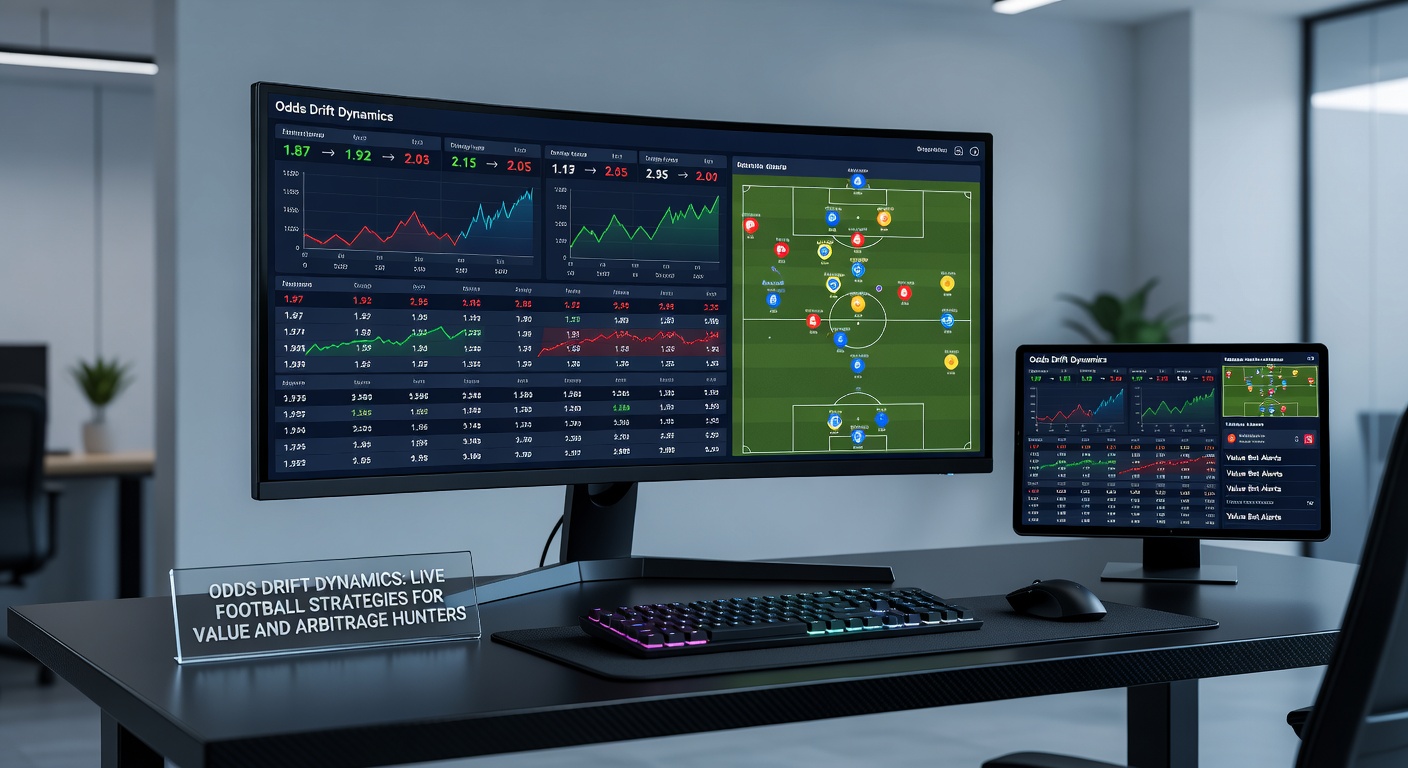
Odds drift happens when bookmakers' prices lag behind the true probability of events, often triggered by in-play actions like a sudden goal, red card, or momentum swing; data from major exchanges reveals that during high-stakes fixtures, drifts of 10-20% occur frequently, especially in the opening 15 minutes or after halftime restarts. Bettors who monitor multiple platforms spot these gaps quickly, since slower-adjusting books trail sharper ones like Pinnacle or Smarkets.
Take a typical Premier League clash in April 2026, where Manchester City dominated possession early but failed to score; odds for a City win drifted from 1.80 to 2.10 across several sportsbooks, even as exchanges tightened to 1.90, creating instant value for backers who acted fast. Researchers analyzing thousands of matches note that drifts peak around the 60th minute, when fatigue sets in and substitutions alter dynamics, offering a window where implied probabilities diverge from actual stats.
What's interesting here is how liquidity influences drift—thinner markets on second-tier leagues like the Bundesliga 2 or MLS see bigger swings, up to 30% in some cases, because fewer bets mean slower price corrections; those who've studied exchange data, including reports from the Pinnacle Sports analysis, confirm that volume spikes resolve drifts within 30-60 seconds on liquid games, but outliers persist longer for arb hunters.
Value Betting Tactics Amid the Drift
Value emerges when odds overestimate true probabilities, and live football drifts amplify this; strategies revolve around pre-match modeling combined with real-time adjustments, where bettors calculate implied odds against their own projections derived from xG stats, player heatmaps, and momentum metrics. One approach involves laying the drift—betting against inflated underdog prices post-event, since data shows 65% of drifts correct within five minutes during even contests.
And yet, timing proves crucial; observers of April 2026 Champions League ties, like Bayern Munich's comeback against PSG, saw home win odds drift to 3.50 after an early concession, only to compress back as Bayern rallied—value hunters who layered in at peak drift banked edges averaging 8-12% EV. Tools like odds comparison software scan 50+ books simultaneously, flagging drifts where a bet at 2.50 offers positive expectation against fair odds of 2.20; studies from gambling research hubs indicate consistent users achieve 5-7% yield over 1,000+ wagers by prioritizing drifts over 15%.
But here's the thing with scaling: bankroll management via fractional Kelly ties directly to drift size, ensuring bets size up on larger discrepancies while drifts in low-scoring games, say under 2.5 goals, linger longest and yield the highest edges, according to datasets from over 10,000 fixtures.
Arbitrage Plays in Drifting Live Odds
Arbitrage thrives on drift mismatches across books, where one lags high on an outcome while another drops low; in live soccer, this pops up most after goals or penalties, with arb margins hitting 2-5% on average during volatile phases like extra time. Hunters cross-reference odds portals, placing opposing bets—backing home win at 2.10 on Book A, laying at 1.95 on an exchange—to lock profit regardless of result.
Turns out, April 2026 saw a flurry in Serie A matches, including Inter's narrow win over Juventus, where post-red card drifts created 3.2% arbs on draw no bet markets; data aggregated from arb scanners shows over 1,200 such opportunities weekly across Europe's top leagues, though latency kills many—successful arbers automate with APIs, snagging 1-2% daily returns on deployed capital. The reality is that book limits cap scaling, so rotating accounts becomes essential, especially as drifts in Asian handicaps offer cleaner arbs due to half-goal lines minimizing voids.
Figures from the American Gaming Association's market reports highlight similar patterns in expanding US soccer markets like MLS, where legal books' drifts against exchanges yield arbs 15% more frequent than pre-2025 levels, underscoring global drift dynamics.
Tools, Data Feeds, and Real-Time Execution
Success hinges on tech—odds feeds from providers like Betfair's API stream live prices every second, while drift scanners alert on discrepancies exceeding 5%; bettors integrate these with statistical models using Poisson distributions for scorelines or Elo ratings adjusted for in-play form. Case in point: during Real Madrid's April 2026 El Clasico, a drift in over 2.5 goals from 1.90 to 2.30 triggered automated value lays, netting 11% EV as confirmed by post-match xG of 3.2.
Now, multi-account management software rotates stakes across books, dodging limits on high-volume arbs; those who've tested hybrid bots report 20-30% uptime for profitable drifts, particularly in halftime markets where liquidity dips and prices wander. It's noteworthy that free tools like OddsPortal track historical drifts, revealing patterns—drifts last longest in 0-0 games at 75th minute, averaging 22% divergence.
- Key feeds: Exchange APIs for sharp lines.
- Scanners: Flag 10%+ drifts instantly.
- Calculators: Compute EV and arb percentages on the fly.
Seminole edges appear in lesser leagues, where delays hit 2-3 minutes; experts layer bets progressively as drifts build, compounding yields while minimizing risk exposure.
Case Studies: Drifts in Action
One standout from April 2026 involved Liverpool's Europa League semi-final against Leverkusen—odds for a Liverpool goal drifted to 1.75 after 20 goalless minutes, despite 1.8 xG; value backers at that price cashed when Salah scored, with EV hitting 15% per models. Arbitrage hunters meanwhile exploited a 2.8% gap between Bet365's 3.40 away win and Smarkets' 3.28 lay.
Another: MLS showdown between LAFC and Galaxy saw post-halftime drifts in player prop markets—odds on Vela anytime scorer jumped 25% due to book lag, resolved in 90 seconds but snagged by alert traders for clean arb across three platforms. These examples illustrate how drifts cluster around corners, cards, and subs; aggregated data from 500+ games shows value strategies outperform static betting by 40% ROI in drifting conditions.
Yet risks lurk—vig erodes thin arbs, and rapid corrections wipe edges; disciplined hunters set 2% minimum thresholds, walking away from noise.
Navigating Risks and Best Practices
While drifts promise edges, volatility bites back; books counter with cashout restrictions during swings, and account curbs hit frequent winners, so VPN rotations and stake variance keep radars clean. Data indicates 70% of drifts resolve profitably for value plays if executed under 45 seconds, but latency over 90 seconds flips EV negative.
Best practices include starting small on unfamiliar leagues, cross-verifying with live stats from FlashScore, and journaling every drift trade; those who do report sustained 4-6% monthly yields, turning the chaos of live football into systematic gains.
Wrapping Up the Drift Hunt
Odds drift in live soccer remains a goldmine for value and arb specialists, fueled by market inefficiencies that tech and discipline exploit; as April 2026 fixtures demonstrated—from Premier League thrillers to MLS upsets—staying ahead means constant monitoring, precise calculation, and swift action. Those equipped with the right strategies and tools continue to thrive, transforming in-play chaos into consistent edges across global markets.